

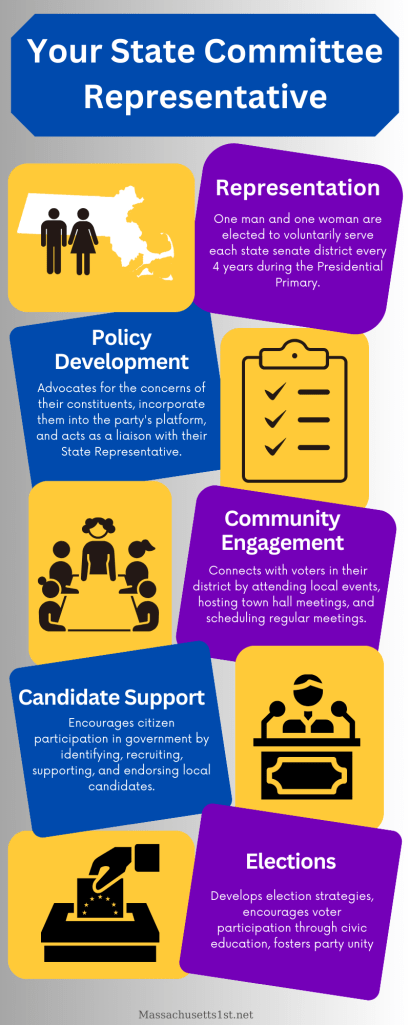
What does a State Committee Representative do?
In Massachusetts politics, State Committee Representatives are key architects of American governance. These volunteer representatives play a pivotal role in shaping the political landscape of the Commonwealth. Their duties extend far beyond the committee room, reaching into the heart of local communities and resonating with the ideals upon which the state was founded.
Responsibilities and Representation
State Committee Representatives serve as the communication channel between their political party and the communities they represent. Elected every four years during the Presidential Primary, these representatives are the voice of their districts, championing the values and concerns of their constituents at the state level. Their role encompasses everything from policy advocacy to facilitating communication between party leadership and local activists.
Policy Advocacy and Platform Shaping
One of the primary responsibilities of State Committee Representatives is to advocate for policies that align with the values of their party and the needs of their communities. These representatives actively engage in the building of the party platform, ensuring that it reflects the many perspectives within the party and addresses the pressing issues facing Massachusetts residents. Through thoughtful debates and discussions, they contribute to shaping the party’s stance on crucial matters.
Constituent Engagement
Beyond the confines of formal meetings, State Committee Representatives are deeply engaged with their constituents. They act as liaisons between the party apparatus and the local communities, keeping residents informed about party initiatives, policy developments, and political events. Through town hall meetings, community forums, and regular communication, representatives ensure that the democratic process remains accessible and transparent.
Candidate Recruitment and Support
State Committee Representatives also play a vital role in the recruitment and support of political candidates. Drawing on their deep understanding of local dynamics, they identify individuals who embody the party’s principles and can effectively address the concerns of their communities. These representatives are instrumental in garnering support for endorsed candidates, providing strategic guidance, and mobilizing resources for successful campaigns.
Electoral Strategy and Coordination
In the lead-up to elections, State Committee Representatives are at the forefront of electoral strategy and coordination. They work with local party committees, activists, and volunteers to devise comprehensive plans that maximize the party’s outreach. By understanding the intricacies of their districts, representatives contribute valuable insights that enhance the party’s chances of success in both local and statewide elections.
Community Building and Outreach
Building a sense of community is a crucial aspect of the representative’s role. By fostering a welcoming and participatory political environment, these representatives encourage community members to actively engage in the democratic process. Through outreach, educational initiatives, and collaborative projects, they strengthen the bonds between residents and their political representatives.
Conclusion
State Committee Representatives in Massachusetts stand as the guardians of America’s governing principles, bridging the gap between party leadership and local communities. Through their dedicated efforts, State Committee Representatives empower citizens to participate in shaping the political landscape of the Commonwealth. As the stewards of democratic values, these representatives play a crucial role in ensuring that the party remains responsive to the needs and aspirations of the people it serves.
by Citizens for Truth Contributor



 Massachusetts First
Leave a reply to State Committee Not a “Token” Position – Massachusetts First Cancel reply