
Voter apathy allows officials to rule without repercussions. Let’s change that!
Vibrant cities and towns thrive on active civic engagement and robust participation in the electoral process. Unfortunately, Massachusetts has long grappled with the issue of low voter turnout in municipal elections. This silent strain on the fabric of the Commonwealth has far-reaching consequences that extend beyond the immediate political landscape, affecting representation, policy decisions, and the overall health of communities.
For example, the average voter turnout in the most recent Massachusetts municipal elections was 25% among the cities with elected mayors. Below is a sample list of Massachusetts cities and their voter turnout percentages, as reported on each city’s official website:1
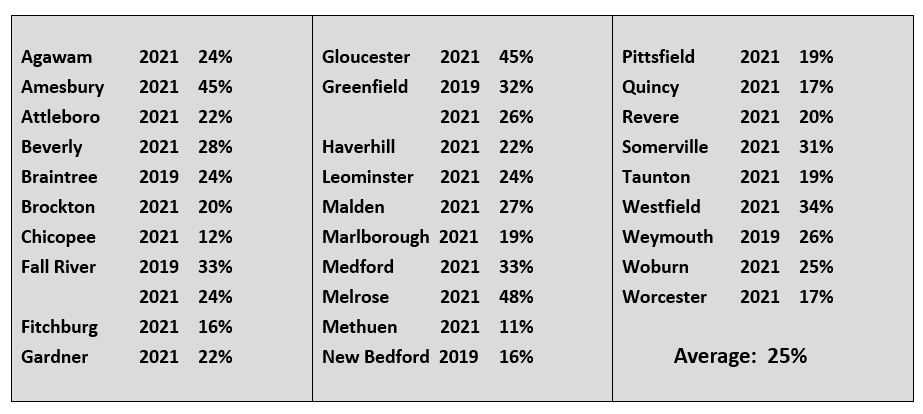
Many factors affect voter turnout. For example, the turnout may be much lower if the Mayoral seat is uncontested. In contrast, turnout would be higher with an open Mayoral seat with no incumbent and two highly competitive candidates. Another factor is the overwhelming one-party Democrat rule across the state, which may discourage citizens who believe their vote won’t matter. Regardless, these rates mean that only 1 out of every 4 Massachusetts citizens decides how our cities and towns are run!
Representation Deficit
Municipal governments are the bedrock of the Commonwealth and play a crucial role in shaping policies that directly impact residents. When a small percentage of the population participates in the electoral process, the resulting elected officials may not accurately represent the needs, values, and concerns of the entire community. This lack of accurate representation can contribute to policies that disproportionately favor certain groups, leaving others underserved. Ultimately, a government not truly representative of its citizens will struggle to address the community’s complex and varied challenges.
Policy Decision Distortion
Low voter turnout distorts policy decisions at the municipal level. Elected officials, aware of the limited engagement of the electorate, may be less inclined to prioritize issues that are important to the community as a whole. Instead, they might focus on topics that benefit a small subset of voters who consistently participate in elections. This can lead to neglect of critical issues such as education, infrastructure, and social services, which affect the entire community. Moreover, elected officials may feel less accountable to their constituents when there is a perception that voters are unlikely to scrutinize their actions. This lack of accountability erodes the checks and balances necessary for a healthy democratic system.
Undermining Community Cohesion
Low voter turnout can also contribute to a sense of detachment and apathy among residents. When individuals feel their participation won’t make a significant difference, they are less likely to engage with their neighbors, local organizations, or civic activities. This breakdown in community cohesion can lead to a fragmented society where residents are less connected and invested in the well-being of their neighbors. When voter turnout is low, it often correlates with a decline in volunteering, attending community meetings, and actively participating in discussions about local issues. This apathy and disconnection can hinder collective efforts to address shared challenges and make changes.
Impact on Local Initiatives
Low voter turnout can stifle local initiatives that require widespread support. Initiatives related to public health, local infrastructure, community development, or public lands conservation may struggle to gain traction if the electorate lacks interest and participation. Additionally, the absence of a robust voter turnout can discourage potential leaders and advocates from stepping forward to champion causes that resonate with the community.
Addressing the Challenge
Addressing the negative effects of low voter turnout in municipal elections requires a multi-faceted approach. Efforts to improve civic education can empower residents with the knowledge and understanding of the impact of their participation. Schools, community organizations, and local governments can collaborate to implement educational programs that highlight the importance of local elections and civic engagement.
Conclusion
The negative effects of low voter turnout in Massachusetts municipal elections are multifaceted, impacting representation, policy decisions, community cohesion, and the success of local initiatives. Recognizing the importance of robust civic engagement and understanding the far-reaching consequences of disengagement is the first step toward fostering more representative local government.
Efforts to address this challenge must be collaborative and sustained, involving educational institutions, community organizations, local governments, and most importantly, individual citizens. By actively working to increase voter participation, we can build stronger, more representative communities better equipped to tackle the complex issues of the 21st century.
The most important way to affect your local community is to
VOTE NOVEMBER 7!
by Citizens for Truth Contributor
Source:
1 Data retrieved from individual municipal election results reported for the 2019 and 2021 municipal elections. Not all cities are represented based on the author’s ability to access election results information from municipal websites.


 Massachusetts First
Leave a comment