I love old books. My home library is full of them. I have a special section dedicated to old children’s books, which I cherish because they are simple and hold fundamental values without being tainted by today’s politics. I like to alert parents to forgotten classics that may provide respite from some questionable content flooding modern bookstore shelves.
Years ago, when I volunteered at my kids’ elementary school library, I found an old book on the “To Be Weeded” shelf. I was intrigued by the title and the artwork, which bore an uncanny resemblance to the (at the time) current favorite of the students’ Diary of a Wimpy Kid series by Jeff Kinney.

Written in 1939, Fair Play by Munro Leaf is a playful yet profound children’s book about how America should work. Not only is it an excellent primer for children, but it also serves as a reminder to adults about the basic ideas on which our country was founded. It contrasts how far America has traveled from a simple system of rules and laws to the miasma of regulation and social “rules” we live under today.
Some of the details in the book are a little outdated, but the tenets of America and how her people should behave toward one another ring just as true today. The author uses innocent, cheeky humor to get the point across.
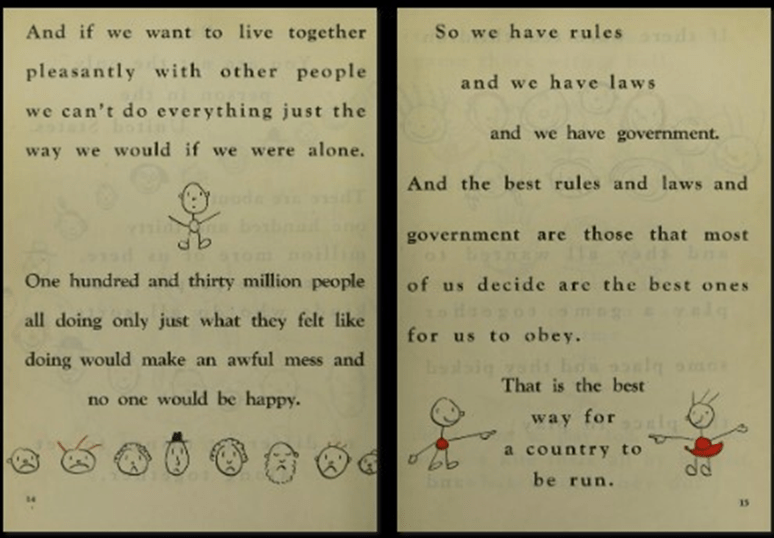
Here are a few sample pages:
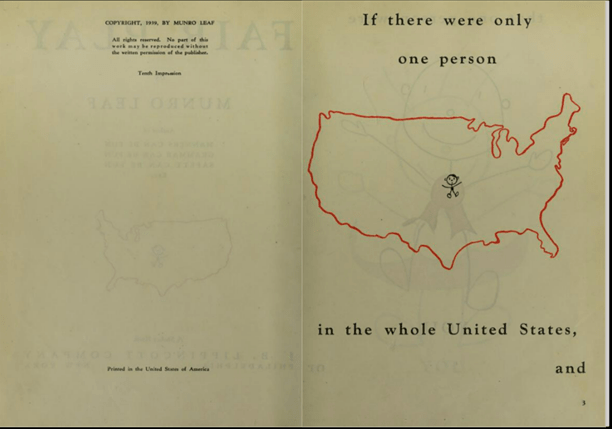


The book addresses how people in America should treat each other, why we have laws, how we choose the laws, and how we choose our leaders. It also touches on the topic of how immigrants can become citizens.

At the end of the book is a collection of types of people that are not good for society:

The other nine examples are:
- A Liar
- A Bully
- A Greedy
- A Lazy
- A WON’T
- A simple-minded creature
- A Flighty (my favorite)
- A never agrees with anybody
- A Stubborn
I highly recommend this book for all ages. It can be read to children as young as pre-K, and as they learn to read, they can enjoy it for years.
I wish I had kept that book when it was weeded in the library! After writing this, I’m going to scour the internet for a hard copy.
You can access the book for free at Internet Archive by clicking here:
You will have to set up an account, but it’s easy and free.
Happy Reading!
The Amateur Librarian

 Massachusetts First
Leave a comment